
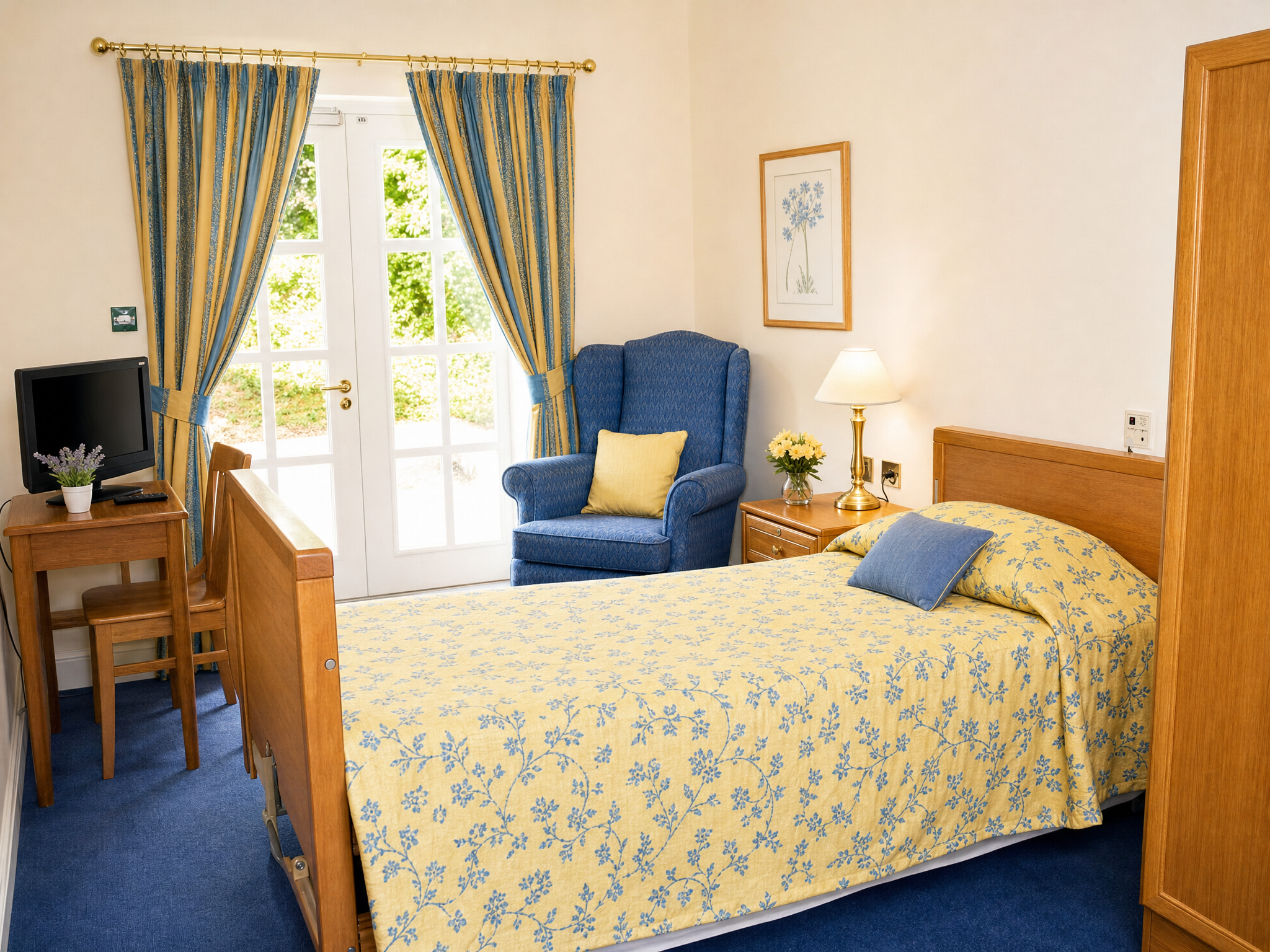
Moving into a nursing home is not like moving house. You can’t take everything. The room is smaller than the one you’re leaving, the wardrobe is fitted, the bathroom is shared (or en-suite, but small), and the practical reality is that ninety per cent of what’s in your relative’s house can’t come with them. Most families know this in theory and panic about it in practice. We’ve helped hundreds of families through this exact moment, and there’s a way to do it well.
The mistake most families make is to bring too much. They feel guilty about leaving things behind. They want the room to look “like home.” They bring three suitcases of clothes, six pairs of shoes, a wardrobe of coats, a chest of drawers full of jumpers — and then their mum or dad spends the first six weeks confused about where anything is, the laundry room can’t keep up, and half the clothes never get worn. Less is more. Truly.
Start with clothes. You want about seven to ten outfits, total, that your relative actually wears. Comfortable trousers with elasticated waists, soft tops, cardigans, a few smarter pieces for visits or church, nightwear, a dressing gown, slippers, two pairs of shoes (one for indoors, one for going out), and underwear. Bring the actual clothes your relative likes — not the ones they’ve been saving for best for thirty years. Send everything to be name-labelled before you move in. Iron-on labels are fine. Sewn-in are better. The home’s laundry will do its best, but in any place with thirty residents, things move around.
What about jewellery and watches? Bring nothing of significant value. We have a safe, but we’d much rather not be holding your mum’s diamond engagement ring. If she wants to wear a wedding band, that’s fine. If she wants to wear a watch, that’s fine. But the Victorian gold necklace your grandfather gave your grandmother in 1947 stays at your sister’s house. Insurance for personal items in nursing homes is patchy, things go missing, and the emotional cost of a lost heirloom is much higher than the practical cost of keeping it safe somewhere else.
Photographs are different. Bring lots. Framed photos of family, on the bedside table, on a small chest of drawers, on the wall — these matter. They orient your relative in their own life. They give visitors something to talk about. For residents with dementia, photos with names underneath are particularly valuable — “This is your daughter Sarah and her husband Mark.” That’s not patronising. It’s helpful.
Bring a few small pieces of furniture if there’s room and the home allows it. Most nursing rooms are furnished — we provide bed, wardrobe, chest of drawers, armchair, bedside table — but a favourite armchair from home, a small footstool, a side table for cups of tea, can transform a clinical-looking room into a personal one. Talk to the home before you bring anything large. We need to risk-assess for fire safety, infection control, and electrical safety.
Bring books, if your relative still reads, but not their whole library. Twenty books is plenty. Bring a Bible, a prayer book, a Quran, a Talmud, whatever scripture matters to them. Bring a notebook and pens. Bring an address book if they still write letters or want phone numbers to hand. Bring a calendar, ideally one with large squares, so they can see what day it is and what visits are coming up.
Bring familiar smells. This is one of the most underrated things, and it matters enormously for people with dementia. The soap your mum has used for forty years. The perfume she wears. Your dad’s particular brand of shaving cream. The talcum powder, the hand cream, the brand of toothpaste. Don’t switch to whatever’s on offer at the supermarket. Keep the brands they know.
Bring a music player. Whether it’s a radio, a CD player, an iPad with Spotify, or one of those simple memory-card players designed for older people — music is one of the most effective tools we have for mood, memory, and engagement. Make a playlist of their music, not yours. Hymns from their church if they’re religious. The big bands of the 1940s, the radio dramas of the 1950s, the popular songs of their youth. We have music available throughout the home, but private music in their own room is a different thing.
Bring something to do with their hands. This is one of the things families forget. A pack of cards. Knitting (if they can still do it). A jigsaw. A photo album. A small gardening project — we have a courtyard, and many residents enjoy looking after a pot or two. Boredom is one of the biggest enemies of wellbeing in a care home, and the home will provide activities, but private things to do in the quiet hours matter too.
What about pets? We have visiting dogs (some of the staff bring theirs in) and we welcome family dogs on visits. We can’t keep resident pets unfortunately — the building isn’t set up for it, and not every resident wants a cat in the corridor. If your relative has a much-loved pet, talk to us. We’ve had situations where a pet was rehomed with a family member and brought in regularly for visits. That can work beautifully.
What about food? Bring favourite biscuits, a tin of their preferred tea, a jar of mum’s favourite jam from the farm shop. We provide three full meals a day plus snacks and drinks throughout the day, but the small touches matter. If your dad has had two ginger nuts with his evening cup of tea every night for sixty years, we want to know about that, and we want the right brand in his room.
What about technology? It depends on the resident. A simple phone, with big buttons, kept on a charger by the bed, is useful for many residents. An iPad with FaceTime is wonderful for keeping in touch with grandchildren abroad, if your relative is comfortable with it. A television in their room is up to them — we have communal TVs but some residents want their own. Hearing aids, glasses, dentures — all need labelling, and all need a routine for charging or cleaning.
What about medical things? Bring the current medication list, in the original packaging if possible, with the most recent prescription receipts. We’ll work with the GP to set up the right medication regime, but the handover information is essential. Bring the most recent letters from consultants. Bring the eye test results, the dental records if you have them, the hearing aid serial numbers. Bring the funeral wishes, if they exist, in a sealed envelope — we hope not to need them for years, but knowing they exist matters.
Bring an honest life history. Where they grew up. What they did for a living. The names of their parents, their siblings, their first pet, their first dance partner. Their religious or spiritual practices. Their political views, if those matter to them. Their food preferences, including the things they hate. The names of grandchildren and great-grandchildren. The names of their old friends. Anything that’s likely to come up in conversation. We use this every day, especially as memory fades.
What to leave behind? Anything valuable that’s not insured. Most kitchen equipment — they won’t be cooking. Most paperwork — the council, the bank, the utilities should be redirected to whoever holds Lasting Power of Attorney. The car — if they’re moving into nursing care, they’re not driving again, and the insurance gets complicated. Most plants — we have plants, and the room is too dry for most houseplants. Most of the books, the records, the souvenirs. The stuff that lived in the attic for thirty years.
And finally, give yourself time. Don’t try to do the move in a single day. We always say to families: bring the essentials on day one, then come back the following week with a second small load, then again the week after. By the end of the third week, you’ll know what the room actually needs — what’s missing, what’s surplus, what your mum keeps asking for. You’ll never get it right on the first day, and that’s fine.
Aldridge Court Nursing Home, Little Aston Road, Aldridge, WS9 0NN. We’ve welcomed hundreds of new residents over the years. We have a moving-in checklist we can send you, and we’re happy to walk you through the room before the move so you can plan. Drop in any time, or call 01922 455731.
One thing we want to say to families about moving day, especially: do not try to be brave. It is one of the hardest days of your life. Cry if you need to cry. Take a friend with you. Plan something gentle for the evening — not a celebration, not a confrontation with a sibling about the will, just something quiet. We’ve watched a thousand families through this day. The ones who go home alone and pour themselves a large glass of something usually have a worse night than the ones who go for a walk with a friend, or sit in a quiet pub, or have a takeaway with their own family. The grief of leaving your mum or dad in a new place, even a good one, is real. Treat it as such.