
If you live in Sutton Coldfield and you’re starting to think about nursing care for a relative, the choice can feel overwhelming. There are dozens of homes in the wider area, big chain operators and small family-run places, brand-new builds and Victorian houses, homes that take only self-funders and homes that mostly take council placements. The websites all look similar. The brochures all use the same words. How do you actually choose?
We’re going to talk plainly here. We’ve been running Aldridge Court Nursing Home in Aldridge for twenty-five years — we’re just over the border from Sutton Coldfield, two minutes’ drive from the Sutton border, and a meaningful proportion of our residents and their families come from Sutton, Mere Green, Four Oaks, Walmley, Wylde Green and the surrounding villages. We know the area. We know the other homes. We know what families in this area look for. So here’s what we’d tell you.
Sutton Coldfield families tend to have a specific set of requirements. They want a home that feels like a home, not a chain. They want continuity of staff — the same faces year after year, not a revolving door of agency. They want to be able to drop in without making an appointment. They want their relative’s room to feel personal, not standardised. They want a manager who knows every resident’s name and family circumstances. They want a home that’s been in the same family for a long time, because that usually means a different relationship with the work.
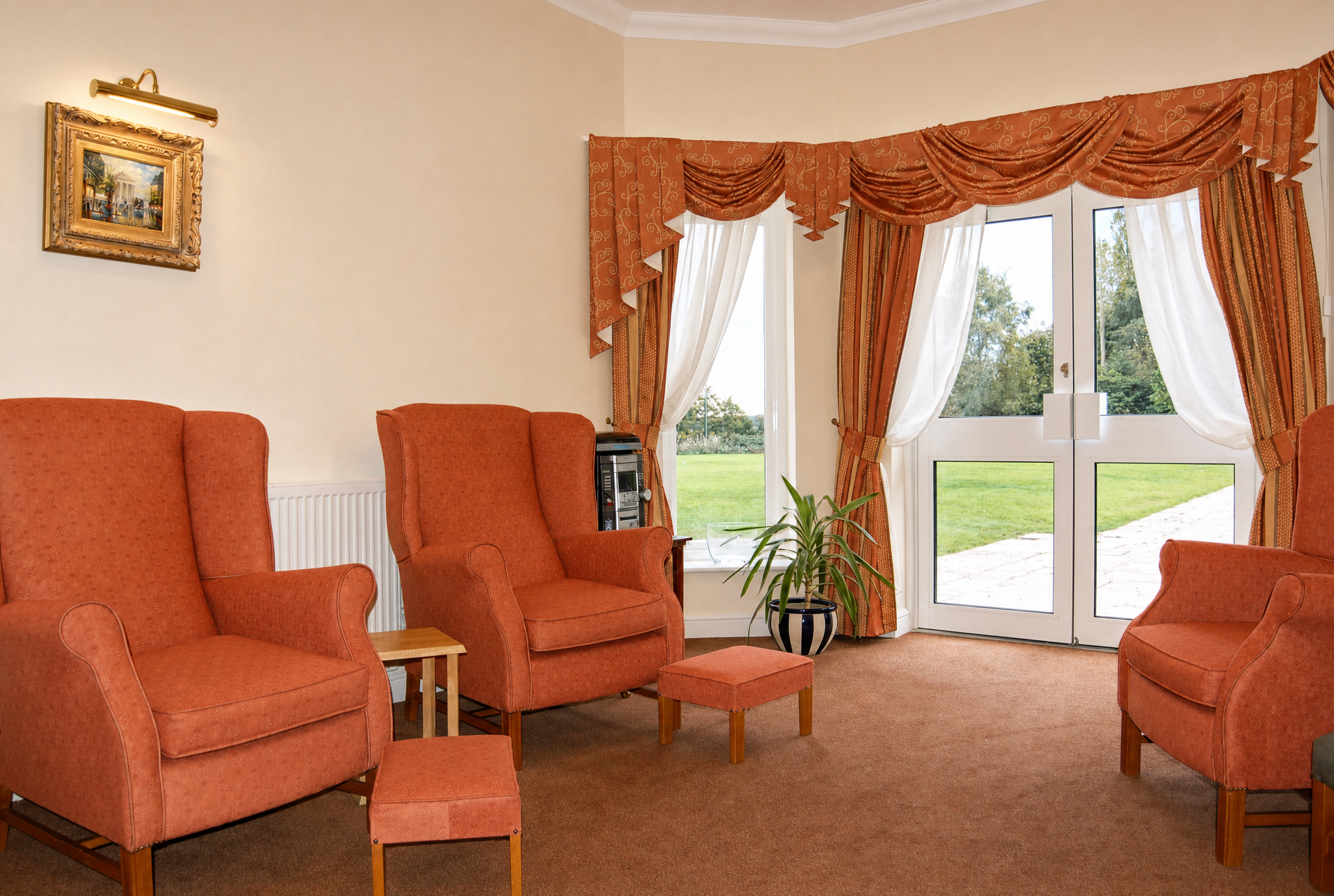
Sutton families also tend to want a particular standard of comfort. Not luxury — most families are quietly suspicious of homes that look too much like spa hotels — but a level of care over the small things. Real flowers in the lounge. Proper crockery at meals. A choice of food at every meal, properly cooked, served properly. A garden that’s used, not just looked at. Carpets and curtains and lamps, rather than vinyl floors and overhead strip lighting. The feel of a comfortable home, kept properly.
And Sutton families want a home with a CQC record that holds up. Rated Good or Outstanding at every inspection. No history of safeguarding issues. No history of significant staffing problems. A record of stable management over time. The CQC reports are public, and they’re worth reading in full — not just the headline rating. Look at the trend over the last three inspections. Look at what concerns have been raised and addressed. Look at how the manager talks about their team and their residents in the comments.
Practical considerations. A Sutton Coldfield family looking at homes in the wider area has to balance several things. Distance from where you live, because you’ll be visiting often. Distance from your relative’s friends, church, GP, hairdresser, all the relationships that matter to them. Proximity to the hospitals you might end up needing — Good Hope, Heart of England, Queen Elizabeth. Public transport links if you don’t drive. Parking, because visiting in a hurry without parking is a recurring stress.
Aldridge Court sits about ten minutes’ drive from Mere Green, twenty minutes from Sutton town centre, fifteen from Four Oaks. There’s free on-site parking. We’re on a bus route. The drive in from Sutton is along Beacon Hill, a road most Sutton families know well. We’re not in the centre of a town, we’re in a leafy village, which is what most families seem to want.
The Sutton families we work with usually visit two or three homes before deciding. We always recommend visiting at least three. Visit a chain home, a smaller independent home, and one home that’s somewhere in between. You’ll see immediately what’s different. The chain homes tend to be larger, more standardised, with more amenities on paper and less personality in practice. The smaller homes tend to be more personal but less polished. There’s no right answer — it depends what matters to your family.
When you visit a home, don’t go alone if you can help it. Bring your relative if they’re well enough. Bring a sibling. Bring a friend who has done this before. Two pairs of eyes catch more than one. After the visit, write down your impressions immediately, while they’re fresh. Three days later, the impressions blur.
Watch what’s not being shown to you, as much as what is. The manager will steer you towards the lounges, the dining room, the gardens. Of course she will. She’s proud of those things. But pause and look at the bits she doesn’t show you. The corridors at the back. The room next to the laundry. The bathroom that’s been waiting for repair. The staff break room, if you can see it. The atmosphere in those spaces is the real atmosphere of the home.
Look at the residents. Are they dressed properly? Are their hair and nails done? Are they in chairs that suit them, with cushions, footstools, blankets? Are they engaged, or are they parked in front of a TV that nobody’s watching? Are they making eye contact with staff, or do they look frightened or withdrawn? Are couples kept together? Are friends seated together? These are the small clues that tell you what the home actually does, beyond the marketing.
Look at the staff. How do they interact with residents? Do they use names? Do they kneel down to talk to people in chairs, or do they tower over them? Do they ask before they touch someone’s wheelchair, or do they just push? Do they apologise for interrupting a conversation? Do they make eye contact, smile, say thank you? Cultures of dignity show in tiny actions. Cultures of routine, where residents are treated as tasks, also show.
Ask about staff turnover. This is the single most important question. A home with low turnover — care assistants who have been there five, ten, fifteen years — will give your relative continuity. They’ll know your mum’s preferences. They’ll notice when she’s not herself. They’ll have stories together. A home with high turnover, where every visit you see new faces, can’t provide that. Care is built on relationships, and relationships need time.
Ask about activities. What’s on the activities board this week? Who’s running them? How many residents take part? What happens for residents who can’t or won’t take part in group activities — is there one-to-one time, sensory work, music in their rooms, visiting therapy dogs? A home where activities are vibrant tends to be a home where residents have meaningful days. A home where the activities board has the same five things repeated for six months tells you something different.
Ask about end of life care. Many Sutton families are quietly worried about whether their relative will be moved to hospital to die, or whether they’ll be cared for in the home. The answer for a good home is that residents are kept and cared for through the end of life, with the support of the local GP, the district nurses, and the hospice. At Aldridge Court, almost all of our residents who die, die with us. We have nurses on duty 24/7. We have the relationships with St Giles Hospice and the local GP practice. We have a team trained in palliative care.
Ask about visits. Open visiting is the standard now, post-COVID. If a home has set visiting hours and tries to dress it up as “for the residents’ benefit,” that’s a flag. We have open visiting at Aldridge Court — you can come morning, afternoon, evening, or in the middle of the night if you need to. We don’t restrict it. We don’t ask you to book a slot. We don’t have a sign-in sheet that asks for your phone number. Visiting is a relationship between you and your relative; it’s not something the home should be policing.
Finally, ask yourself one question after the visit. Would you be happy spending the last years of your life in this place? That’s the test. If the answer is yes, write the home down. If the answer is “well, it would be okay, I suppose,” cross it off. There are enough good homes that you don’t have to settle for okay. Your relative deserves a place that feels like home.
Aldridge Court Nursing Home, Little Aston Road, Aldridge, Walsall WS9 0NN. Ten minutes from Mere Green, twenty from Sutton. We’ve been here twenty-five years. Family-run. Rated Good by the CQC. Drop in any time — no appointment needed — or call 01922 455731.
Two more things specific to Sutton families that come up in our conversations. First, parking and visiting access. Many Sutton families have older relatives who can no longer drive, and the practical question of how to visit becomes important. Aldridge is well-served from Sutton by car. The 16A bus runs to Aldridge village, with a short walk. Some families share lifts. Some pay for taxis. If you’re choosing between homes and visiting access is a concern, factor it in honestly.
Second, the community connection. Some Sutton residents have lived in the same parish for decades, with deep ties to a church, a club, a group of friends. Moving into a home that’s twenty minutes’ drive from those connections is different from moving into a home that’s an hour’s drive away. A relative who can still see their old friends, attend their old church on occasion, keep up their old book group, will settle differently from one who’s been moved out of their world. We have residents who maintain those community connections actively, and we support visits in both directions — old friends visiting here, residents going out for the day to see old neighbourhoods.